
Injection of funds will help boost housing supply
Experts say modular homes can 'speed up construction times by 50 per cent and slash the cost of building by 20 per cent'.
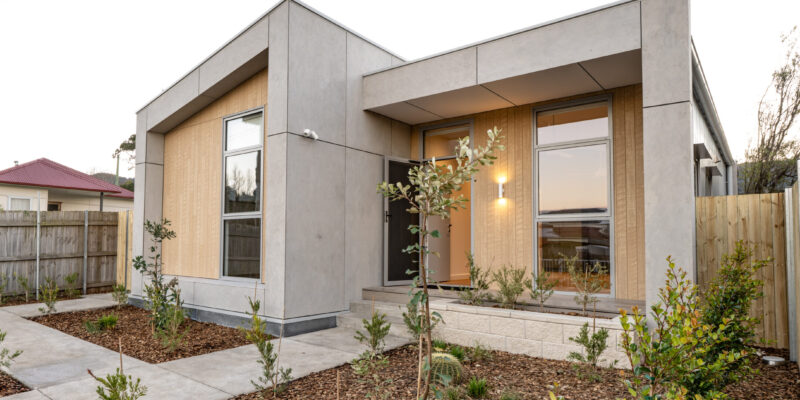
A MODULAR home factory will receive $120 million in taxpayer backing to turbocharge the fledgling industry and solve Australia’s housing shortage.
The investment in Built Living – a 50:50 joint venture between Australian contractor Build and Bunnings owner Wesfarmers – is the first foray into housing by the federal government’s investment vehicle, the $15 billion National Reconstruction Fund.
The $220 million manufacturing facility in the outer-Perth suburb of Neerabup, which will start construction in the second half of 2026, promises to produce more than 2000 apartments per year.
Once complete, pre-cast concrete components including walls, bathrooms and kitchens will roll off the facility’s production line before being installed by builders at apartment developments on-site.
That could speed up construction times by 50 per cent and slash the cost of building by 20 per cent, NRF chief executive David Gall said.
By helping to scale up modular construction, Gall hopes the NRF’s intervention will encourage private investment in advanced manufacturing facilities across the country.
“So it’s really those three reasons that we felt that this was an important investment in manufacturing,” he said.
“The NRF is all about reinvigorating manufacturing in the country and, in particular, in sectors that can benefit significantly from that.
“We felt that the housing sector and this advanced manufacturing here can play a really important role.”
While Gall hopes the facility’s success will encourage private investors to pile into the sector, he expects the NRF will be involved in additional advanced manufacturing facilities in other states.
On top of the NRF’s $120 million loan, Wesfarmers will provide $100 million in equity investment to fund the facility.
The Western Australian government will provide land as well as a $20 million grant.
The investment brings the total funding committed by the NRF to a bit over $2.3 billion.
While the terms of the loan are commercial in confidence, Gall said he was confident the facility would be consistent with the fund’s target rate of return, which is two to three per cent for medium to long-term investments.
“It is absolutely consistent to what is in our investment mandate and the statement of expectations that our ministers have provided to the NRFC,” he said.
Construction of the project is expected to create about 150 jobs, with another 150 ongoing roles once operational.
The NRF makes its investment decisions independent of government but industry minister Tim Ayres said the facility will deliver “enormous dividends for housing and for young Australians”.
“It will drive … a discussion across the whole construction sector about modern methods of construction, how we can drive productivity and new innovations in construction to make housing cheaper, to make it delivered faster, and to deliver more homes for young Australians,” Ayres said.