What’s really going on at the back of house?
At first glance, the issue in real estate all over is in the supply and demand of housing the impact on pricing. In the first of Australian Conveyancer’s real estate focus series, the REIQ boss says we need to look well beyond that to find a fix

Desperate supply-and-demand issues, cumbersome compliance obligations, and staffing shortages are the key concerns for the Queensland real estate industry in 2026, according to REIQ CEO Antonia Mercorella.
“It’s tempting to say that the top three issues facing Queensland’s real estate industry this year are supply, supply and supply because that’s how significant and serious an issue our significant housing shortfall is,” she said. “It impacts us all.”
And Mercorella said the Sunshine State’s supply constraints are met with the equally pressing issue of demand.
“In the years following the pandemic, Queensland has led the country for population growth driven by incredibly strong migration – likely attracted to our enviable lifestyle, opportunity and subtropical climate,” Mercorella told AC.
Figures from Cotality show that between Q1 2020 and Q3 2025, Queensland accounted for over 25 per cent of the national population growth compared with less than 20 per cent of dwelling completions.
“We’re not expecting the housing demand pressure from migration to go away anytime soon – south-east Queensland’s population is projected to reach 4.5 million by the time Brisbane hosts the Olympics in 2032 and may get as high as five million by 2036,” Mercorella said.
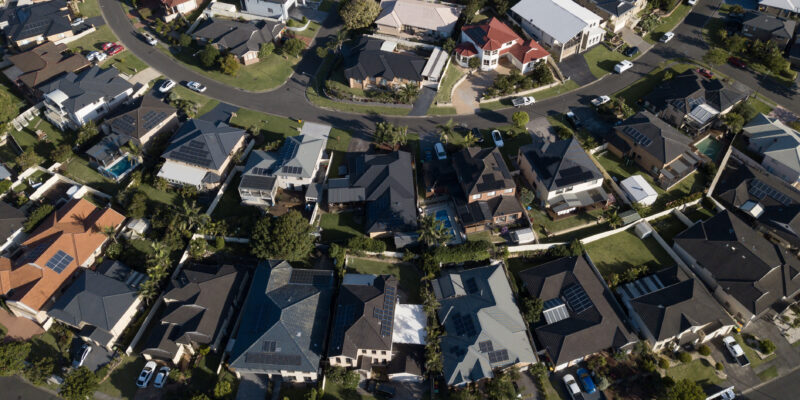
“All of these people flocking to Queensland are going to need roofs over their heads and the question on everyone’s lips is where are we going to house them?”
The REIQ said there are various solutions to the supply issues in Queensland’s cities and towns, including:
- Creating greater housing density – more than 600 people move to Brisbane every week yet it remains one of the least dense cities of its size in the world;
- Better adoption of modern methods of construction – including modular housing and 3D printed homes;
- Greater construction productivity – building faster, cheaper and providing incentives to attract more tradies to Queensland;
- Streamlining local Government approvals to increase supply, including structural reform and smarter financial incentives to drive productivity and delivery; and
- Empowering people with technology tools so they know what they can do with their land/property.
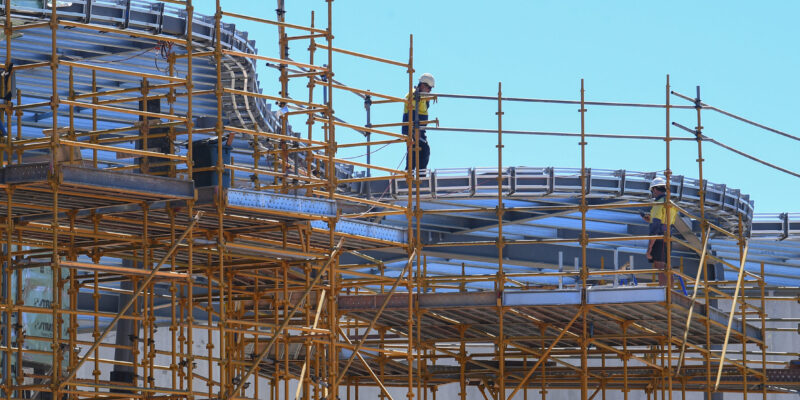
Mercorella points to the soaring cost of construction in Queensland as the biggest bottleneck to new supply, with the state experiencing the highest increases in residential construction costs of all the mainland states between 2024 and 2025 (ABS).
“Build costs impact the bottom line which flows through to what developers can viably sell the new housing for, and it doesn’t always stack up,” she said.
“That’s why the properties we do have in the pipeline are heavily skewed towards high-end product such as luxury apartments.”
Mercorella believes construction for infrastructure and the Olympic Games is also pushing up build prices around the state.
“A key driver of recent elevated costs is a significant labour shortage of construction workers and tradespeople, especially in the context of a huge pipeline of infrastructure projects, including those related to the Olympics,” she said.
“Another driver is low productivity in the construction industry.
“And, while we’re all feeling the impact of global conflict at the petrol pump, the flow-on inflationary impact to manufacturing and construction, through higher transport and logistics costs, couldn’t come at a worse time.”
Meanwhile, on industry-related matters, Mercorella anticipates new and “extensive” Anti-Money Laundering and Counter-Terrorism Financing (AML/CTF) compliance obligations, which begin taking effect on July 1, will impose a “significant time and expense impost on agencies, buyers and sellers”.
“These are new legal obligations and tasks for Queensland real estate businesses – often small, independent operations – and, as such, they are likely to require new expertise, systems, tools and resources to meet them,” she said.
“We recognise that these additional financial and administrative burdens could be the straw that breaks the camel’s back for many small businesses.”
Adding extra pressure on real estate businesses is the challenge of finding staff, training and retaining them.
“Property management is a sector increasingly relied on by real estate businesses for its revenue contribution,” she said.
“However, there’s also been an increase in the number of experienced property managers leaving or intending to leave the profession due to the high-stress nature of the sector.”
Mercorella said REIQ continues to recognise the important role conveyancers play in the real estate chain and their work should not be undervalued.
“While we are a state peak body for real estate professionals, REIQ is also committed to providing education and support to the broader Queensland community on real estate related matters,” she said.
“The REIQ often strongly recommends that sellers and buyers engage the services of conveyancing professionals to seek advice about buying property before entering into a contract and to undertake the conveyancing process.”
Mercorella said purchasers of property need to know the costs of failing to employ a conveyancer.
“We understand the need for quality conveyancing advice and we see time and time again that skimping on quality can be costly,” she added.
“Using a conveyancing professional from the outset ensures the seller’s and buyer’s best interests are protected and provides peace of mind when making what may be the largest single financial transaction of one’s life.
“We would encourage the conveyancing community to articulate and demonstrate their value – and the potential cost of not appointing a conveyancing professional – wherever possible in order to help justify the costs they wish to charge for their services.”
Mercorella said the REIQ is currently championing the simplification of the Sellers Disclosure regime, which they believe is costly and unclear.
“While the REIQ supports the intent of a uniform statutory disclosure regime to provide consistent information to all property buyers in Queensland, we are advocating for the urgent review and resolution of several shortcomings and flaws in the current regime to make it clearer, simpler and less expensive,” she said.
“As the peak body for real estate professionals, REIQ has written to, and met with, the Attorney-General, Deb Frecklington and her department to raise and discuss our concerns about the regime, and there is an active consultation process underway.
“We are quietly optimistic that through this review, we can improve the document and improve the process.”