

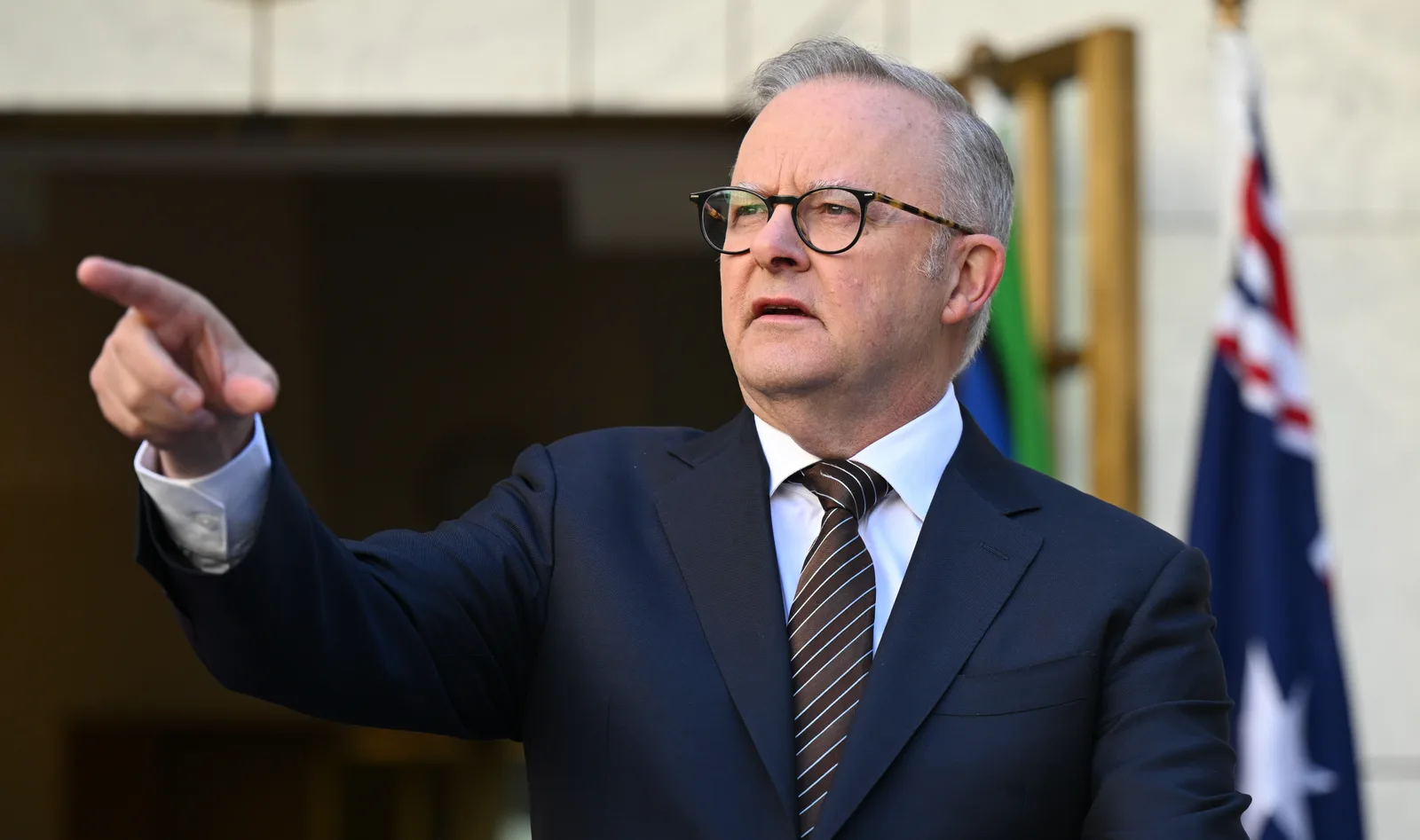
THE prime minister is laying the blame for high government spending at the coalition's feet as households prepare to tighten their belts after another interest rate rise.
Opposition leader Angus Taylor and shadow treasurer Tim Wilson have latched on to the Reserve Bank's decision to raise interest rates to an 18-year high, saying the move symbolised the failings of Anthony Albanese's government.
Albanese was in the Caribbean when rates were lifted for the fifth time in 2026, leaving treasurer Jim Chalmers at home to carry the can, giving Labor's political opponents more reason to twist the knife.
"Australians need hope right now but what we've got is a government that's addicted to spending," Wilson told ABC Radio on Wednesday.
Public spending, the highest relative to GDP in 40 years, excluding the Covid-19 pandemic, was contributing to domestic capacity pressures and driving up inflation, he said.
Wilson co-opted comments by Reserve Bank governor Michele Bullock to damn the government.
Bullock said the Iran war and the artificial intelligence boom had worsened price pressures since the bank last raised rates in September but acknowledged domestic capacity pressures were higher than previously thought.
Speaking from the Commonwealth Heads of Government Meeting in Antigua and Barbuda, Albanese defended Labor's efforts to tighten the belt, including restraining growth in NDIS and aged care spending.
Government spending moderated in the 12 months to November as cost-of-living measures were phased out and expenditure on defence, disability and aged care services eased, the central bank said.
Albanese turned the blame back on the coalition for refusing to back the government's proposed savings measures.
"You can't oppose the private health insurance changes at the same time as you're calling for changes to fuel taxation, which would have an impact on inflation, and you can't oppose the European Free Trade Agreement," Albanese said.
"The European Free Trade Agreement will make goods to Australia cheaper.
"That has a downward impact on inflation."
More savings would be coming in December's mid-year Budget update, Albanese said.
But he warned they would be hard decisions.
Housing minister Clare O'Neil was quick to draw attention to the consequences of slashing public payments.
"Our government pays for Medicare, so that when you get sick, you can go to the hospital and get the care that you need; it helps pay for aged care places if you've got an elderly parent," she told Seven's Sunrise.
"It's not a simple exercise."
Lower public spending will help reduce aggregate demand and help the Reserve Bank bring inflation back under control.
But it also means cutting payments people rely on while the cost of living rises.
Updated Reserve Bank forecasts show a worse outlook for inflation-adjusted wage growth, with workers' pay packets set to retreat one per cent in 2026 in real terms.
"The European Free Trade Agreement will make goods to Australia cheaper. That has a downward impact on inflation."
Despite higher inflation and interest rates, household spending has remained relatively resilient.
Spending rose 0.6 per cent in September, the Australian Bureau of Statistics reported on Wednesday.
Higher fuel costs skewed the numbers but discretionary spending was still up 6.9 per cent in annual terms.
Spending could slow because of pressures on household budgets, Commonwealth Bank senior economist Ashwin Clarke said.
"The RBA is on edge about inflationary pressures and, if we continue to see strong spending, this will add to the case for further rate hikes in early next year," he said in a client note.
"The strong result today highlights that risk."
Westpac on Wednesday announced it was passing on the 0.25 percentage point increase in full to home loan customers and deposit holders.
NAB and CBA passed the increase on to home loans but have yet to change deposits.
In this story