
A LEADING futurist has told conveyancers that adopting AI into their business is "emancipating and powerful".
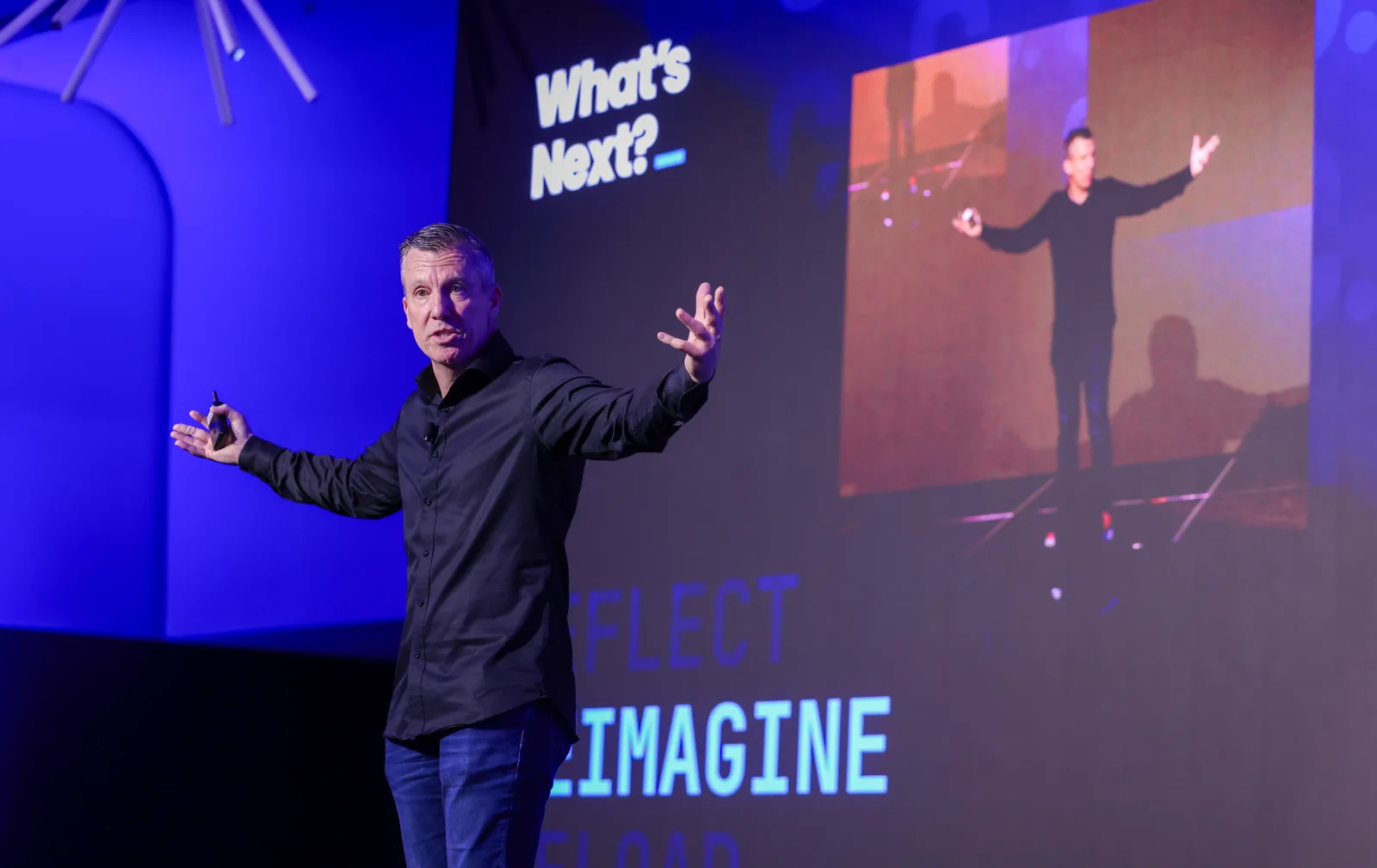
Steve Sammartino, a renowned AI expert who has delivered over 700 presentations in 41 countries, was the keynote speaker at Australian Conveyancer’s What's Next? event on Tuesday.
He ventured to take the audience “under the hood” of artificial intelligence, explaining where it came from and where it’s headed.
AI, he explained, is simply another technical revolution, like smart phones, the internet, planes and automobiles.
What’s different, change is coming at the conveyancing industry faster than ever. And one aspect supports others, like phones giving us access to the internet.
Smartphones give us access to all the world’s knowledge. A giant brain, a PhD, in our pocket, Sammartino said.
And AI, like ChatGPT, makes it all so easy.
"If you can talk, you can do it. This is emancipating. It’s so powerful,” Sammartino said.
So how do we control AI, rather than it controlling us?
Perhaps in the questions we ask of it, questions that produce best results when determined by human, not machine, intelligence.
“We trust flesh and blood,” he said.
“We trust us. We make the decisions. We want AI to do the grunt work, while WE make the decisions.”
Which brought him to another proposition: if corporations can replace humans with AI, why not use AI to reproduce ourselves, and increase our productivity?
Maybe those replicants can be robots.
Sammartino predicts that by the end of this decade every household will own at least one robot.
The best currently come from China. But why not use Chinese robots to build Australian robots? Or robotic versions of ourselves?
It is indeed a brave new world.
And Sammartino said it will take bravery to embrace it. “Courage is core.”
He was joined onstage by another futurist, ATI Global CEO Christian Beck, founder of companies like LEAP, LawConnect, InfoTrack and triSearch.
Companies that use high technology.
"It's no more risky than a human doing the whole thing."
Beck was asked about AI and security when it comes to hi-tech software directing multi-million-dollar property transactions.
“It’s no more risky than a human doing the whole thing,” Beck said.
“If there’s ever a breach it would cost us millions, so we make sure it’s very secure.”
Another topic: growing public opposition to data centres.
Yes, we need them, said Sammartino, but they should be placed in rural areas with their own sustainable power supply.
“Data centres are like trucks,” he said.
“No-one likes them in their streets but they like the things they deliver.”
In this story