

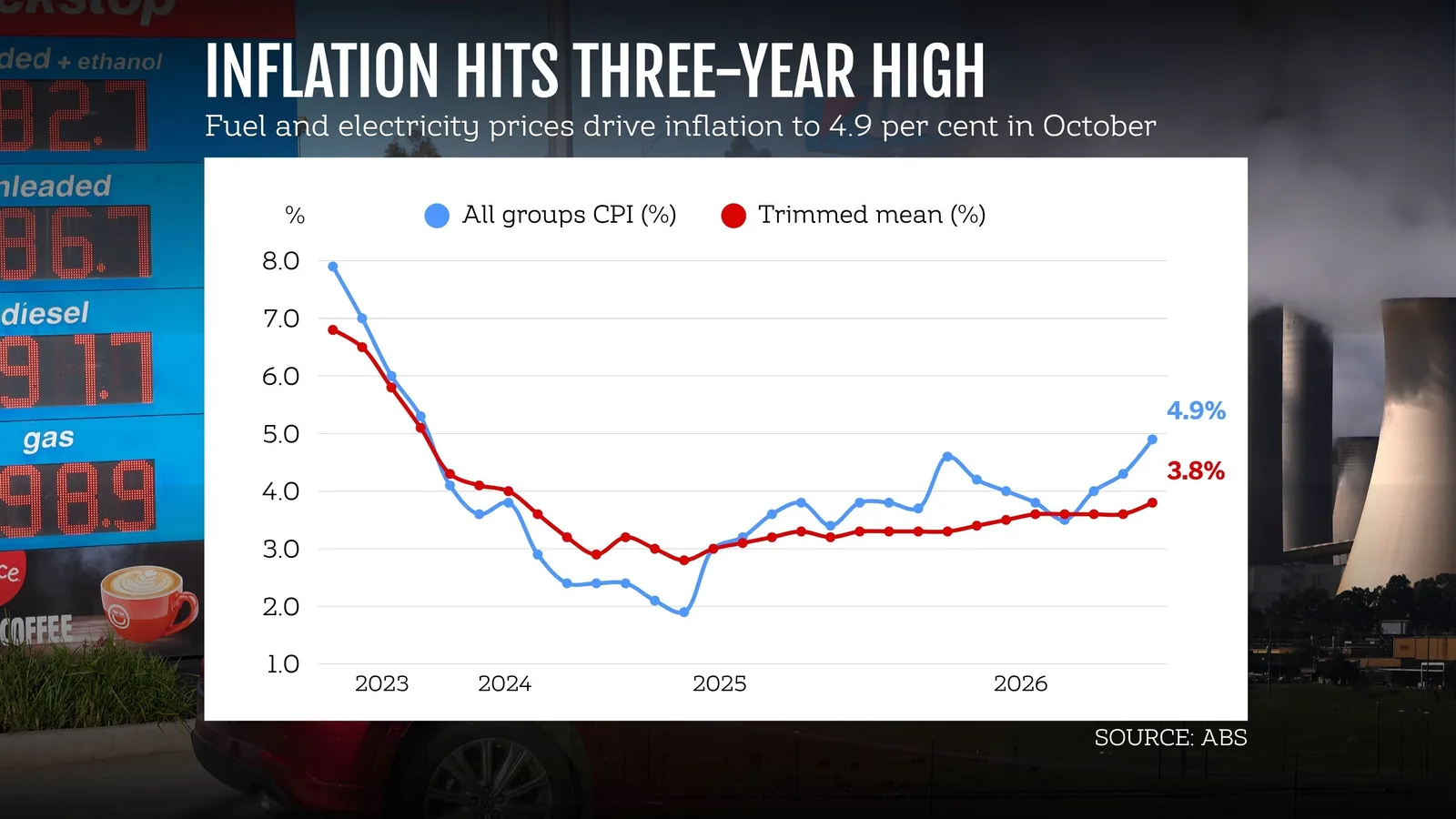
HIGHER fuel prices drove Australia's headline inflation rate to a three-year high in October, leaving the Reserve Bank and the treasurer with a delicate tightrope walk as the economy slows.
The consumer price index rose 4.9 per cent on an annual basis, up from 4.3 per cent in the 12 months to September, the Australian Bureau of Statistics reported on Wednesday.
The result - the worst since September 2023 - exceeded market expectations for a 4.8 per cent rise.
§ Rising inflation and unemployment complicate rate outlook
While it was bad news for the Reserve Bank, a jump in unemployment to 4.9 per cent and growing recession fears would keep the central bank on hold at its December meeting, said Oxford Economics Australia head of research Harry Murphy Cruise.
"Rising inflation and unemployment are the RBA's worst nightmare," he said.
"Both are at odds with its dual mandate of price stability and full employment but they require opposing policy responses: taming inflation requires higher rates but that comes at the expense of employment."
However, it does heighten the risk the RBA waits longer before reducing interest rates.
Murphy Cruise expects rates to remain on hold at 4.85 per cent throughout 2027, despite ANZ Bank economists on Tuesday bringing forward their timing for the first cut to June.
The Australian dollar and bond yields firmed as cash rate expectations rose on the back of the release.
§ Oil and electricity prices drive headline inflation
The jump in headline inflation was largely due to transitory factors, including surging oil prices in the month and a ban on card payment surcharges, which kicked in on October 1.
The housing basket - which includes electricity prices - was the largest contributor to annual inflation, with power prices rising 25.2 per cent.
"The rise in electricity reflects Commonwealth government rebates, which reduced household electricity costs last year but are no longer in place," ABS head of price statistics Rachael McCririck said.
Ahead of the release, economists at NAB said October would likely mark the peak for headline inflation.
§ Underlying inflation and new dwelling costs rise
The trimmed mean, a measure of underlying inflation closely watched by the RBA, climbed from 3.6 per cent to 3.8 per cent.
The measure strips out volatile price rises such as fuel, which rose 32.5 per cent on an annual basis.
But the cost of new dwellings, a more sticky item in the inflation basket, also grew strongly at 5.1 per cent.
§ Treasurer promises savings in December budget update
Treasurer Jim Chalmers promised substantial savings in the December mid-year budget update to help the RBA in its fight against inflation, potentially including cuts to the public service and electric vehicle subsidies.
"This is another unwelcome but unsurprising reminder of the pressure Australians are under," he said in a statement.
"This increase was expected by economists because of global oil prices and the timing of energy rebates last year, but that doesn't make it any easier for Australians to cop.
"The Budget is not the primary driver of prices in our economy but we take our responsibilities in the fight against inflation seriously and that's a major focus of next month's MYEFO."
Chalmers faces a difficult balancing act in the December Budget update, said Stephen Smith, partner at Deloitte Access Economics.
"The treasurer must attempt to hand down a Budget update that cuts enough to take some pressure off inflation but avoids cruelling an economy on the cusp of a downturn," Smith said.
"That is a challenging tightrope walk.
"However, on balance, locking in some net savings in the current financial year in order to assist in putting downward pressure on price growth should be the priority."
Frequently asked questions
Is the RBA expected to change rates at its December meeting?
What are economists forecasting for interest rates in 2027?
Why did electricity prices rise?
What has the Treasurer promised in response to inflation?
In this story