

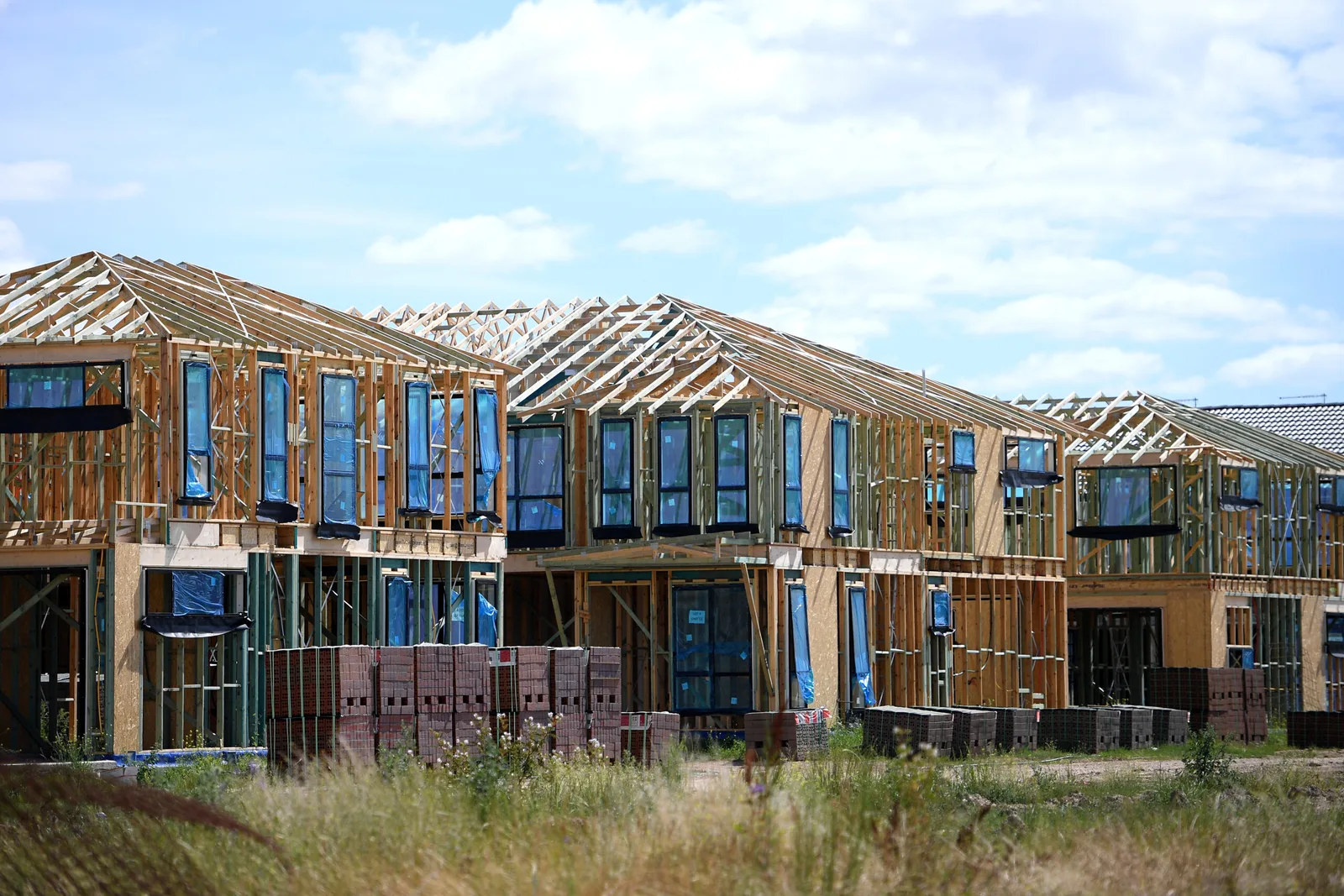
A PEAK industry body has said the latest inflation number is placing another handbrake on the construction of new homes.
Housing Industry Association chief economist Tim Reardon said today's news that headline inflation had risen to 4.9 per cent shows "the risk of further interest rate increases remains elevated".
“Governments need to lower the cost of delivering new homes and encourage more investment in housing to avoid a significant downturn in home building in 2027 and 2028,” Reardon said.
"The five increases in interest rates this year are already seeing households and investors retreat from the new home market.
“Sales of new homes in the three months to October were 27.3 per cent lower than in the same period a year earlier.
“While the volume of homes commencing construction will remain relatively robust in the first half of 2027, this reflects the strength of sales prior to this year’s Federal Budget and recent interest rate increases."
Reardon said the challenge for governments is to ensure that there is sufficient investment in new housing to sustain construction activity as this pipeline of work is exhausted.
"The only long-term solution to the affordability challenge is to increase housing supply," he added.
“There are two things that governments can do to mitigate the impact of higher interest rates on housing supply.
“The first is to reduce the cost of delivering new homes.
"Governments cannot control the global price of oil but they can reduce the taxes, infrastructure charges, regulatory costs and delays they impose on the construction of new homes.
“Reducing the cost of delivering new homes would help contain housing inflation, improve affordability and enable more projects to proceed, even in an environment of higher interest rates.
“The second is to encourage more investment in new housing, not less.
“The changes to housing taxation announced in this year’s Federal Budget and the restrictions on borrowing by self-managed superannuation funds are seeing investors retreat from the new home market at a time when Australia needs more homes to be built.
“Historically, as established home prices declined, investors would return to the market and help underpin a recovery in new home building.
“The risk in this cycle is that the additional taxes and restrictions imposed on investors will delay that recovery."
Reardon said large superannuation funds have a role to play in financing new housing, particularly in the build-to-rent apartment market, but this remains a niche segment of Australia’s housing market.
“The prohibition on self-managed super funds from borrowing to build homes is an additional loss of investment in new home supply," Reardon said.
“They are not a substitute for the hundreds of thousands of individual investors who collectively finance the construction of detached homes, townhouses and apartments in communities across Australia.
“If governments want to see more homes built, they need to make investing in the construction of new homes more attractive, not less.
“Putting the home building industry through another boom-bust cycle will only make it harder and more expensive to deliver the homes Australia needs.
“Reducing the cost of building new homes and restoring confidence among private investors are two things governments can do now to prevent a deeper downturn in home building and a worsening of Australia’s housing shortage,” Reardon concluded.
Original source: Housing Industry Association